Red dot sights are one of the most common optic upgrades American shooters make. They go on AR-15s, handguns, shotguns, and more. They vary in price point from $40 to $1,000. They also can generate more confusion among new buyers than almost any other piece of gear.
Most of that confusion comes from terminology. Red dot, reflex sight, holographic, prism scope: these terms get used interchangeably online, and they are not the same thing. Before you buy anything, understanding what you are looking at matters.
One note on terminology before diving in: while these optics are universally called red dots, most modern sights offer both red and green reticle options. Green tends to be easier to pick up in bright outdoor conditions for some shooters. The choice between them comes down to personal preference and lighting environment. The framework below applies to either.
What a Red Dot Sight Is
A red dot sight is a broad category, not a specific product type. It refers to any optic that uses an illuminated aiming point rather than traditional iron sights. The “dot” is projected onto a lens and appears to float on your target. Both eyes stay open. The goal is to acquire the target faster than you would with iron sights.
Within that broad category there are three distinct technologies worth understanding:
Reflex sights are the most common. They use an LED to project a reticle onto a partially reflective lens. The dot is only visible to the shooter: not to the target. Most budget and mid-range red dots are reflex sights. They are lightweight, parallax-free at typical engagement distances, and available at every price point.
Holographic sights use a laser to project a holographic reticle onto the lens. The image quality is different from a reflex sight: many shooters find it easier to pick up quickly. EOTech is the dominant brand in this category. Holographic sights are generally more expensive, starting around $400, and consume battery faster than most reflex sights. They are also notably better for shooters with astigmatism, which causes the dot on a standard reflex sight to appear blurry or starburst-shaped.
Prism scopes use a prism to focus and magnify the image, typically at 1x to 5x. They look like a short rifle scope and offer a more defined reticle than most reflex sights. Unlike reflex sights, they require the shooter to look through the optic rather than at it. They work well for shooters with astigmatism and for anyone who wants a fixed low magnification option without a separate magnifier. Primary Arms builds some of the most respected prism scopes in this category at competitive price points.
The Specs That Matter
When evaluating any red dot sight, these are the numbers and features worth paying attention to:
MOA dot size MOA stands for Minute of Angle. One MOA equals approximately one inch at 100 yards. A 2 MOA dot covers two inches at 100 yards, four inches at 200 yards. Smaller dots are more precise at distance. Larger dots are faster to acquire at close range.
For most AR-15 uses, a 2 MOA dot is the right balance: precise enough for 200-yard accuracy and fast enough for close-quarters work. For a home defense or close-range application, a 3-4 MOA dot is acceptable and faster. For precision shooting beyond 200 yards, consider a 1 MOA dot or a prism scope instead.
Battery life Budget sights often claim long battery life on paper. The meaningful number is battery life at a mid-brightness setting, not maximum brightness. Anything above 10,000 hours at a moderate setting is solid. The best sights in the $150-300 range often hit 20,000 to 50,000 hours. Auto-shutoff features help preserve battery on sights that don’t reach those numbers.
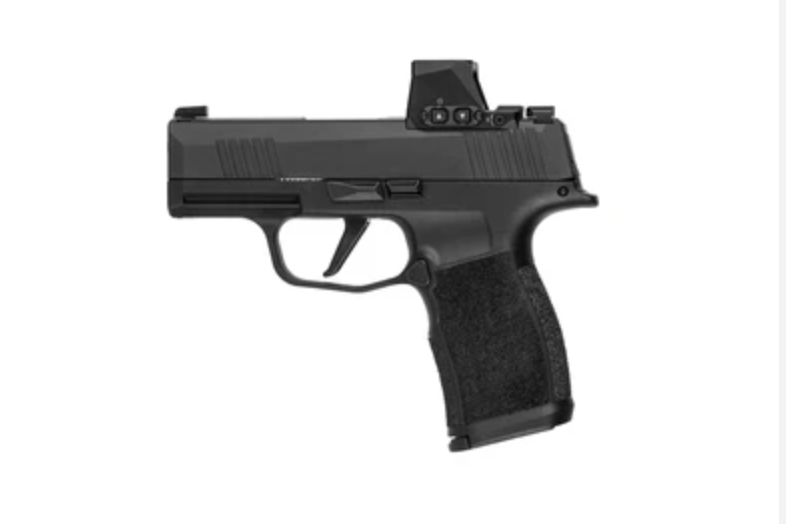
Mounting footprint Not all red dots mount the same way. Some firearms (usually older models) don’t have the option to mount them unless you alter or upgrade the firearm. The most common footprints are the Docter/Noblex pattern, the RMR footprint (used by Trijicon and widely copied), and the Shield RMS footprint. If you are mounting a red dot directly to a pistol slide, your pistol’s optics cut determines which footprints are compatible. If you are mounting to a rifle’s Picatinny rail, compatibility is generally simple with the right mount height.
Brightness settings A quality red dot should have enough brightness settings to be usable in both low light and direct sunlight. Sights with fewer than six settings often leave gaps: too dim indoors, too bright at night, not bright enough to see in midday sun. Look for sights with at least eight to ten settings.
Night vision compatibility If you run or plan to run night vision, you need a sight with dedicated NV-compatible settings that dim below normal low-light use. Most budget sights do not have these settings. Mid-range and above typically do. If NV compatibility matters to you, confirm it before you buy.
Construction and weather resistance Aircraft-grade aluminum housing is the standard for anything worth mounting on a firearm. Look for waterproofing rated to at least IPX7: submersion to one meter for 30 minutes. Fog-proof nitrogen purging matters in cold environments where temperature swings cause condensation. A quality red dot in the $100-300 range should meet these specs. Below $100 is where construction quality becomes inconsistent.
The Price Tiers
Under $100 Functional for casual range use and plinking. Battery life and construction quality are the limiting factors. These sights work but are not built for hard use, adverse conditions, or a primary defensive role. The Bushnell TRS-25 is one of the most cited options in this range and holds zero adequately for light use.
$100 to $200 This is where the value proposition improves meaningfully. The SIG Sauer Romeo5 sits in this range and has earned a strong reputation for its motion-activated illumination, 40,000-hour battery life, and reliable zero retention. Holosun’s entry-level offerings also compete here. For a range rifle, a recreational AR, or a first red dot, this tier delivers real performance.
$200 to $400 Mid-range. Holosun dominates this space with features like solar backup power, multiple reticle options, and titanium housing on some models. Primary Arms optics compete strongly here, particularly their SLx line which offers features at this price point that competing brands charge significantly more for. This is the tier where most serious shooters land for a primary defensive or competition optic.
$400 and above Aimpoint, EOTech, and Trijicon own this tier. These are the optics that have documented military and law enforcement use behind them. The performance gap between a quality $250 optic and a $600 Aimpoint is real but narrow for most civilian applications. Where the premium tier earns its price is in extreme durability, extended battery life, and the kind of abuse tolerance that matters in a professional or duty context. For most range shooters and hunters, the $200-400 tier is the better value.
Pistol vs. Rifle Red Dots
Not all red dots work on both platforms. Pistol red dots are generally smaller, lighter, and designed to withstand the rearward slide cycling forces of a semi-automatic handgun. Mounting directly to a pistol slide creates a different stress environment than mounting to a rifle rail. An optic designed for rifle use may not hold zero on a pistol slide over thousands of rounds.
If you are mounting to a pistol, look for optics specifically rated for pistol use. If you are mounting to a rifle rail, almost any quality red dot will work.
The Glock Gen6’s new Optic Ready System was designed specifically to address the mounting stability issues that plagued previous generations. If you are running a Gen6, the included mounting plates are compatible with RMR and DPP footprints: confirm your chosen optic matches one of those before you buy.
Where to Start
Primary Arms carries one of the broadest optics selections available, from entry-level reflex sights through their own well-regarded SLx prism scopes, at prices that compete with anyone in the market. Their filtering tools let you sort by platform, price, and reticle type which is useful when you are working through options.
Brownells and EuroOptic are also worth checking for current pricing and availability, particularly on premium brands where prices fluctuate.
Before you buy anything, confirm the optic is compatible with your specific firearm’s mounting system, that the dot size matches your intended use, and that the construction specs meet the environment you will be using it in. A red dot that fails at the range or in the field because it was not built for the application is an expensive lesson.
The optic is a multiplier on the shooter’s fundamentals, not a replacement for them. Buy the right one for the job and learn to use it well.
This article may contain affiliate links. Tuebor USA may earn a commission if you purchase through these links at no additional cost to you. Links are updated periodically, but pricing and availability may have changed since publication. Always verify current pricing at the retailer before purchasing.