
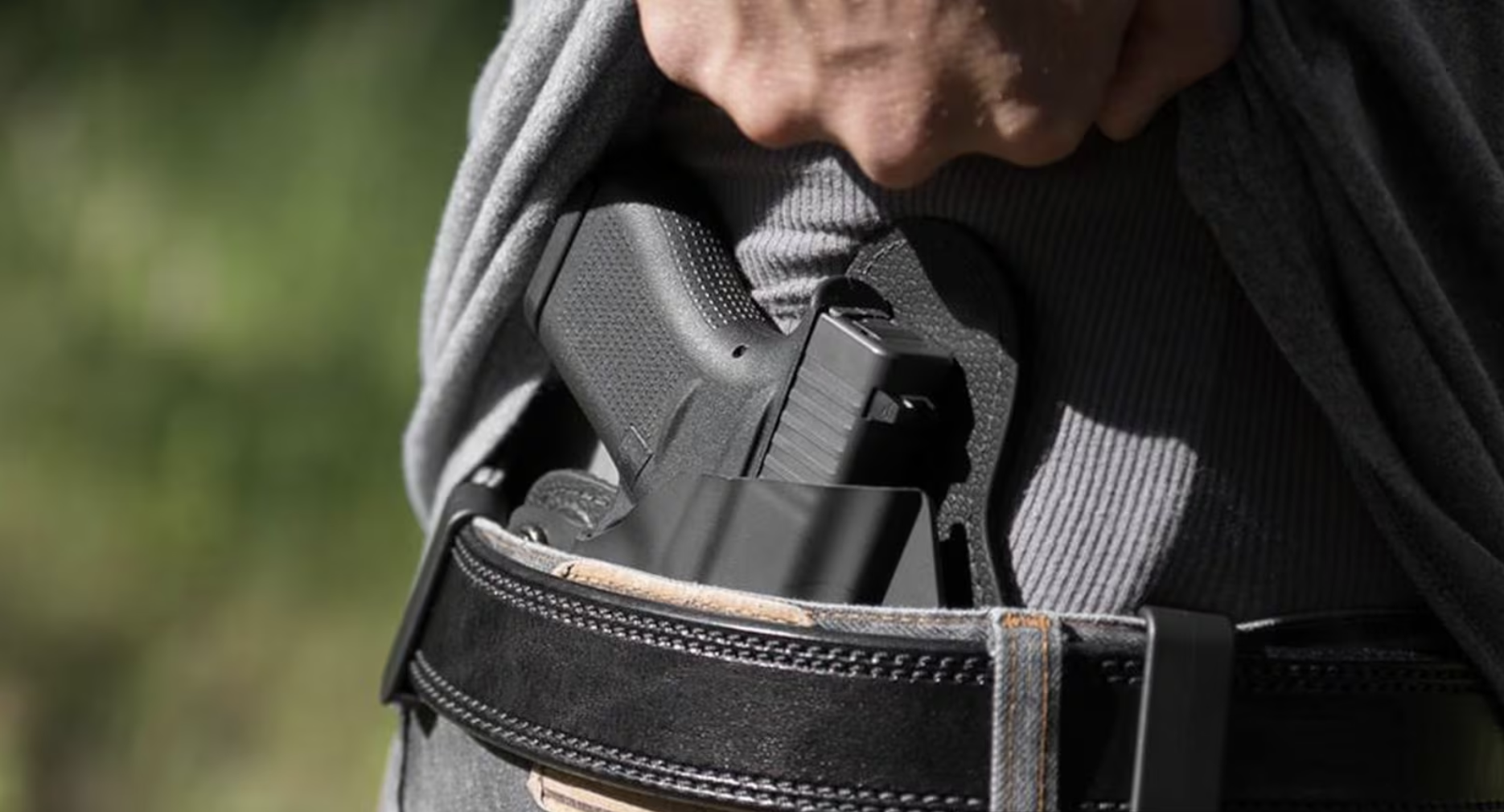
Michigan is a shall-issue state. That means if you meet the legal requirements, the county clerk must issue you a Concealed Pistol License (CPL). There is no discretion, no subjective judgment, nothing beyond what the law requires.
Who Qualifies
To be eligible for a Michigan CPL you must:
- Be at least 21 years old
- Be a United States citizen or lawfully admitted immigrant alien
- Have been a Michigan resident for at least six months prior to application
- Not be prohibited from possessing a firearm under state or federal law
- Have no felony convictions
- Have no misdemeanor convictions for specific offenses including domestic violence, stalking, and certain firearms-related violations
- Have no history of involuntary commitment for mental illness
- Not be subject to a personal protection order or bond condition prohibiting firearm possession
- Complete a state-approved pistol safety training course
Michigan does not have permitless carry. Carrying a concealed pistol without a CPL is a felony under MCL 750.227. A CPL is the only legal path to concealed carry in Michigan.
The Training Requirement

Before you apply, you need to complete an eight-hour pistol safety training course taught by an instructor certified by the Michigan Commission on Law Enforcement Standards (MCOLES) or a national organization approved by the state.
The course must cover:
- Safe storage, use, and handling of a pistol
- Michigan firearms laws
- How to identify and avoid threatening situations
- Shooting range time with live fire
Training certificates are valid for five years from the date of completion. Your certificate must be current at the time you submit your application. Expired certificates are not accepted.
Training courses are available statewide through certified instructors, gun clubs, shooting ranges, and organizations like the Michigan Coalition for Responsible Gun Owners (MCRGO) and the USCCA. Costs typically range from $97 to $150 depending on location and instructor.
The Application Process
Step 1: Complete your training Finish your eight-hour course and obtain your certificate of completion from your instructor.
Step 2: Get your application CPL application kits are available free of charge at your county clerk’s office during normal business hours, or you can download the application at michigan.gov/firearms. The application is the RI-012 Concealed Pistol License Standard Application.
Step 3: Submit your application in person You must appear in person at the county clerk’s office in the county where you reside. Bring:
- Your completed and unsigned application (you will sign it under oath at the clerk’s office)
- Your original training certificate
- Your Michigan driver’s license or state-issued ID
- Payment of $115, which covers the application fee and fingerprinting
Step 4: Get fingerprinted Fingerprints are taken at the county clerk’s office or at a Michigan State Police post, sheriff’s office, or local police agency. Your fingerprints are submitted electronically to the Michigan State Police for a background check. The $115 fee covers fingerprinting when done at the county clerk’s office. Some counties charge separately for fingerprinting. Confirm with your specific county clerk before you go.
Step 5: Wait The county clerk must issue your license or a notice of statutory disqualification within 45 days of the date your classifiable fingerprints are taken. You will receive a receipt when you submit your application. If 45 days pass without a license or denial, that receipt, carried with your state-issued ID, serves as a valid temporary CPL until the official license arrives.
Step 6: Receive your license Your CPL will be mailed to the address on your application. The license is valid for five years.
Cost Summary
- Training course: $97 to $150 depending on provider
- Application and fingerprinting fee: $115
- Total estimated cost: $212 to $265
What Your CPL Gets You
Beyond the right to carry a concealed pistol, a Michigan CPL provides several practical benefits worth knowing.
NICS alternative permit: As of June 3, 2025, the ATF confirmed that a Michigan CPL qualifies as a National Instant Criminal Background Check System (NICS) alternative permit. This means CPL holders can skip the standard background check process when purchasing a firearm from a licensed dealer. The dealer still creates a Pistol Sales Record, but the separate NICS check is not required.
Vehicle carry: CPL holders may carry a loaded concealed pistol in a vehicle. Without a CPL, any firearm in a vehicle must be unloaded, in a closed case designed for firearms, and in the trunk.
Pistol purchase: CPL holders are exempt from the License to Purchase requirement when buying a handgun from a dealer. Without a CPL, Michigan residents must obtain a License to Purchase from a local police department before buying a handgun.
Reciprocity: A Michigan CPL is recognized in approximately 39 other states. For current reciprocity information before you travel, check the USCCA Reciprocity Map or USA Carry. See our full guide to concealed carry reciprocity for more detail.
Duty to Inform
Michigan is a Duty to Inform state. If you are stopped by a peace officer while carrying, you must immediately inform them that you are carrying a concealed pistol. This is a legal requirement, not optional.
Pistol-Free Zones
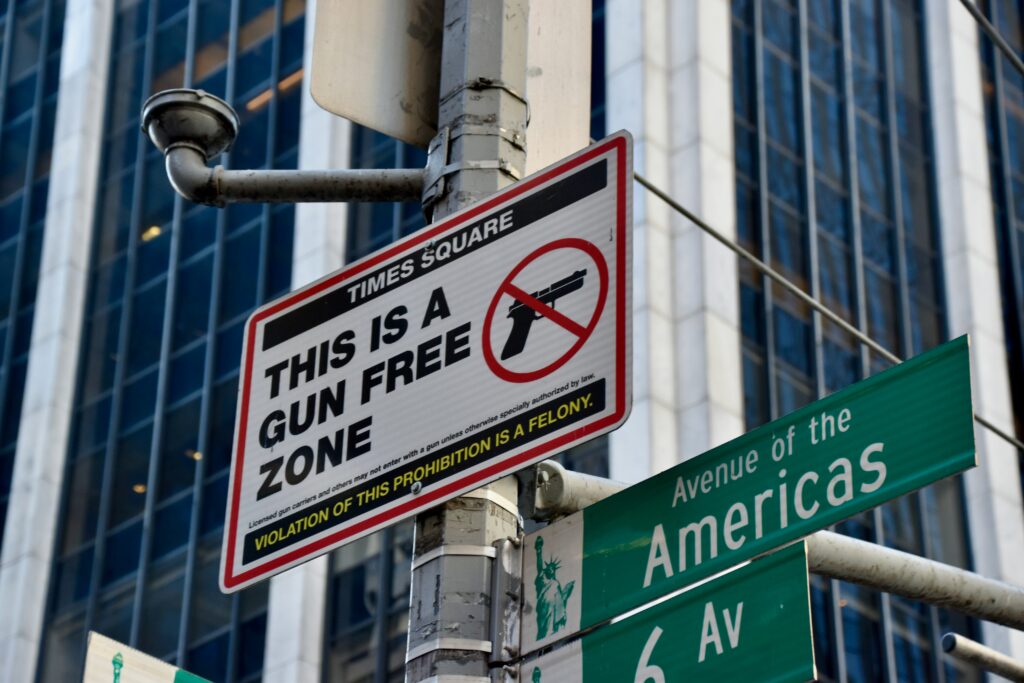
A CPL does not allow you to carry everywhere. Michigan law designates specific pistol-free zones where concealed carry is prohibited even with a valid CPL. These include:
- Schools and school property
- Public or private daycare centers
- Sports arenas and stadiums
- Bars and taverns (establishments where more than 50% of revenue comes from alcohol sales)
- Houses of worship during services, unless the presiding official has given approval
- Entertainment facilities with a seating capacity of 2,500 or more
- Hospital or hospital grounds
- Dormitories or classrooms of a community college, college, or university
- Casino gaming areas
- Courtrooms and court offices
- Secured areas of airports
Carrying in a pistol-free zone with a CPL is a civil infraction on the first offense and escalates to a misdemeanor on subsequent violations. Carrying without a CPL in a pistol-free zone is a felony.
On “No Guns” signs: In Michigan, posted “No Guns” signs do not carry the force of law for CPL holders. However, if a property owner or their agent asks you to leave because you are carrying and you refuse, you can be charged with criminal trespass.
Renewing Your CPL
Michigan CPLs are valid for five years. You will receive a renewal notice from your county clerk three to six months before your license expires.
Renewal options:
- Online: Available through the Michigan State Police if you receive a renewal letter with a PIN number
- By mail: Send your completed renewal application and check to Michigan State Police, Attn: Concealed Pistol License Unit, P.O. Box 30634, Lansing, MI 48909
- In person: At your county clerk’s office
Renewal requires certifying that you have completed at least three hours of review of required training materials and at least one hour of range time in the six months preceding your renewal application. The full eight-hour course is not required for renewal.
If you move to another state, your Michigan CPL expires when you establish residency in the new state.
Emergency CPL
Michigan law provides for an emergency CPL in two specific situations:
- You have obtained a personal protection order under Michigan law
- The county sheriff determines there is clear and convincing evidence that your safety or the safety of a family member is endangered by your inability to immediately obtain a CPL
An emergency CPL is valid for 45 days and is issued without the six-month residency requirement. Within ten business days of receiving an emergency CPL, you must complete a valid pistol training course and apply for a standard CPL.
Where to Start
The Michigan State Police firearms page is the authoritative source for current applications, forms, and CPL information. Your county clerk’s office handles the application process directly. Find your county clerk at michigan.gov.
For training providers, MCRGO maintains a list of certified instructors statewide.
This article is for informational purposes only and does not constitute legal advice. Michigan firearms law changes periodically. Verify current requirements at michigan.gov/msp or consult a qualified attorney before making decisions based on this information.